Our Story
Find out more about Romney Marsh Wools
Romney Marsh Wools was born through a firm belief that we wanted to raise awareness of all the benefit that British wool can bring. Natural wool has so many excellent qualities as it is renewable, sustainable and incredibly versatile. Not only can you use the wool itself but you can even use the lanolin which sheep also produce naturally which can be extracted once the sheep have been shorn.
OUR WOOL
Rooted in Romney Marsh
Wool is at the heart of our family, our farm and Romney Marsh Wools.
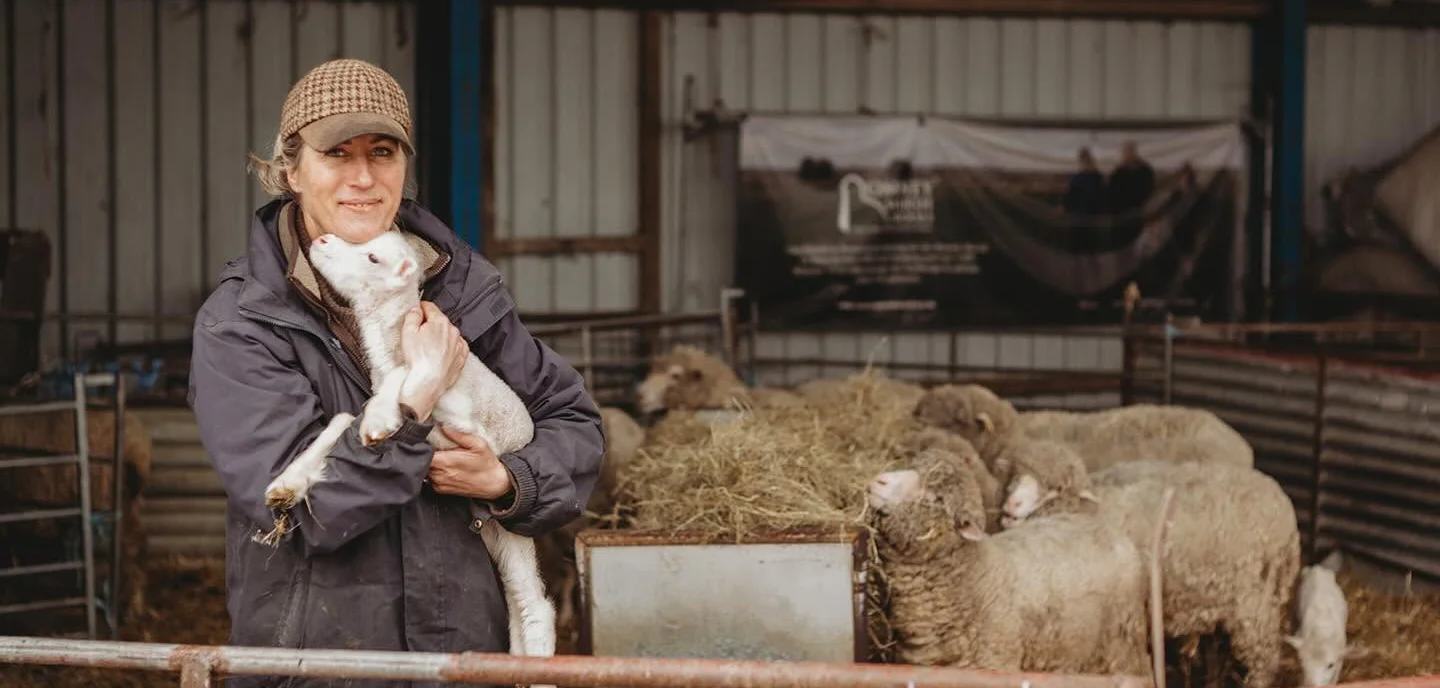
Romney sheep have been part of our family farming story for at least six generations, and quite possibly longer. Today, our flock continues to graze the pastures of Romney Marsh in Kent, with our ewes traditionally lambing during March and April.
The Romney, also known as the Kent sheep, has a long association with this landscape. A hardy British breed, it has been kept on Romney Marsh for centuries and is particularly well suited to the area's distinctive environment.
Romney Wool
Romney wool is a wonderfully versatile British fibre.
Its naturally creamy-white fleece has a subtle lustre and combines durability with character. British Wool classifies Romney fleece as a medium wool, typically measuring around 31.5–34 microns, with a long staple.
These characteristics make Romney wool suitable for a wide variety of uses, from knitting yarn and cloth to blankets, throws and other hard-wearing wool products.
The natural character of the fibre is something we celebrate rather than try to disguise. Wool can vary slightly from fleece to fleece, reflecting the sheep, the season and the natural environment in which it was grown.
From Fleece to Finished Product
One of the founding principles of Romney Marsh Wools was to find meaningful uses for the fleeces produced by our sheep and to demonstrate the value and versatility of British wool.
Our wool travels through specialist processes including scouring, spinning and weaving before returning as beautiful finished products.
Where appropriate, we also blend our natural cream Romney wool with naturally coloured British wools to create different tones, textures and designs without losing the individual character of the fibre.
Today our collection has grown far beyond our original wool products, but our connection with the farm and our belief in making better use of this remarkable natural material remain at the heart of Romney Marsh Wools.
A Naturally Renewable Fibre
Every year a sheep grows a new fleece, making wool a naturally renewable fibre.
Wool is also biodegradable. Under appropriate conditions, at the end of its useful life the natural fibre can break down and return nutrients to the soil rather than remaining indefinitely as a synthetic fibre.
Its natural structure is what gives wool many of the characteristics for which it has been valued for generations.
Wool fibres have a natural crimp. When the fibres come together, they create tiny pockets of trapped air which contribute to wool's insulating properties.
The fibre can also absorb and release water vapour, helping wool respond naturally to changes in temperature and moisture.
Naturally Resilient
Wool is naturally strong, flexible and resilient.
Its complex fibre structure allows it to bend and recover repeatedly, helping well-made wool products retain their appearance and perform over time.
Wool also has a naturally waxy outer surface which helps repel water droplets and dirt, while its ability to absorb moisture contributes to its relatively low build-up of static electricity.
With the right care, a quality wool product can last for many years. We love the idea that our throws, blankets and other wool pieces can become part of a home for years to come – and perhaps even be passed from one generation to the next.
Understanding Microns
You'll often see the word micron used when talking about wool. A micron is simply a measurement used to describe the diameter – or fineness – of an individual fibre.
The lower the micron measurement, the finer the fibre.
Romney wool typically sits at around 31.5–34 microns, giving it the durability and versatility for which the breed's wool is known.
Finer fibres can generally feel softer against the skin, while stronger, more robust fibres are particularly well suited to products where durability and structure are important.
This is one of the wonderful things about wool: different sheep breeds produce fibres with different characteristics, allowing the right wool to be selected for the right purpose.
Wool and Sensitive Skin
Wool itself is not considered an allergen. Research indicates that the familiar sensation of wool feeling "itchy" is generally associated with the diameter and stiffness of individual fibres rather than an allergy to wool itself.
This is why very fine wool can feel quite different against the skin from a more robust wool fibre.
Everyone's skin is different, however, and people with particularly sensitive skin should choose products according to their own comfort and individual needs.
Celebrating British Wool
Britain is home to an extraordinary variety of sheep breeds, each producing wool with its own characteristics, from fine and soft fibres through to strong, resilient wools designed by nature to withstand challenging environments.
For us, wool isn't simply a raw material. It represents our sheep, our farming heritage, the landscape of Romney Marsh and generations of knowledge and craftsmanship.
That connection between sheep, farm, fibre and finished product is the story at the heart of Romney Marsh Wools.
What Our Customers Say
Great products!
Jennifer
Owner